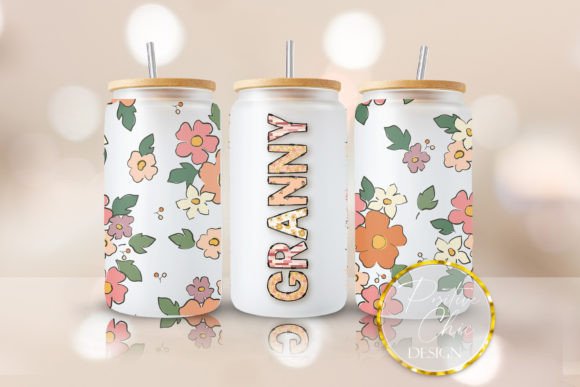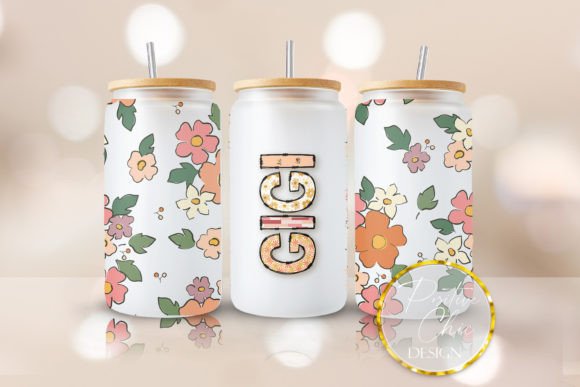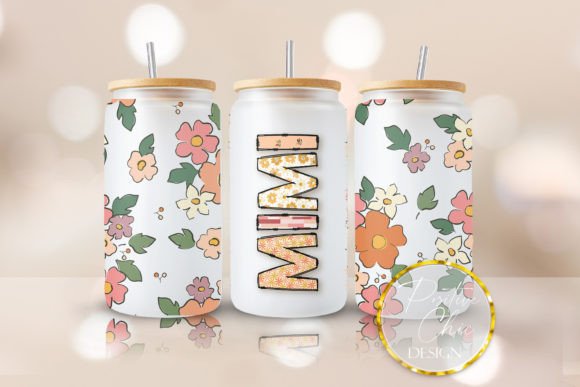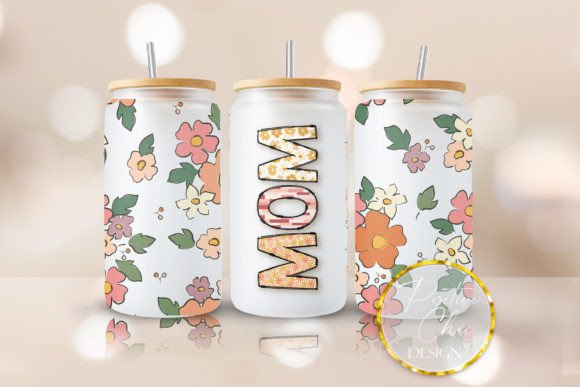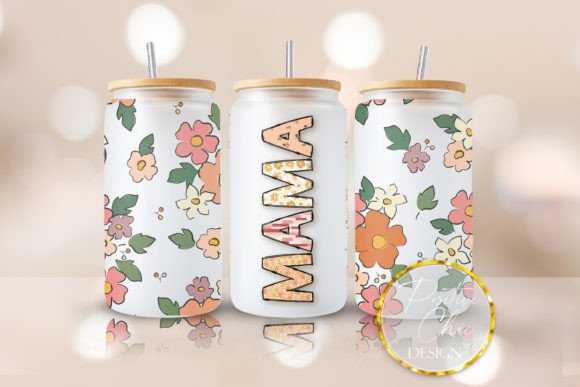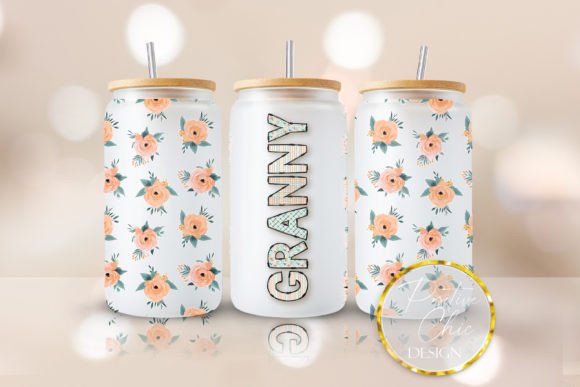
Granny Libbey Cup Wrap UVDTF Wraps 16 Oz
Let’s be real: as an embroidery designer who’s stitched thousands of client projects—from boutique baby onesies to Etsy bestsellers—I don’t just download a design and stitch it blind. I read it first. So when I opened Granny Libbey Cup Wrap UVDTF Wraps 16 Oz, my eye went straight to proportion, rhythm, and implied texture—not just “what it looks like,” but “how will it behave under needle and thread?”
A Design That Feels Like a Conversation, Not a Decoration
This isn’t a busy floral or over-rendered script. Granny Libbey Cup Wrap UVDTF Wraps 16 Oz carries a gentle, grounded warmth—think vintage kitchen linen meets modern craft shop signage. The layout wraps naturally around the tumbler’s curve, with balanced negative space and clear visual hierarchy. That matters more than you’d think when translating to embroidery: too much density in one zone? You’ll get puckering on a cotton tote. Too little definition in the lettering? It’ll vanish on a brushed fleece sweatshirt.
I pictured it instantly on a heavyweight linen tea towel—stitched in ecru and charcoal cotton thread, with soft satin-stitched outlines and airy fill stitches for the background motifs. Not fussy. Not fragile. Just quietly confident. That’s the kind of handmade product customers hold longer, photograph more, and tag your shop for.
Where It Shines (and Where It Asks for Thought)
Granny Libbey Cup Wrap UVDTF Wraps 16 Oz works beautifully for custom apparel that leans into nostalgia and intentionality: embroidered aprons for local bakeries, pillow covers for farmhouse-style nurseries, even personalized baby caps for boutique gift sets. Its moderate detail level means it scales well across hoop sizes—no micro-lettering that collapses at 3” diameter, no sprawling fills that overwhelm a 4x4 hoop.
But—and this is where experience kicks in—it’s not a “throw-it-on-anything” file. On thin rayon or stretchy jersey, the outer contours need careful stabilizing. On dark fabric, lighter thread choices must be tested early: some of the delicate line work relies on contrast, not just saturation. And if you’re planning a layered look—say, stitching this wrap onto a patch base before attaching it to a denim jacket—check how the edges interact with seam allowances. The design assumes a smooth, cylindrical surface (like its intended Libbey tumbler), so curved or uneven substrates demand mockup testing.
Real Project Pulse Check: The Holiday Kitchen Towel Series
Last December, I used a similar wrap-style motif for a limited-run set of holiday kitchen towels sold through my small shop. Customers loved the cohesive, giftable feel—but two returned items had slight distortion near the bottom edge, where the fabric shifted during hooping. With Granny Libbey Cup Wrap UVDTF Wraps 16 Oz, I’d pre-test on the exact towel weave I plan to use, adding a tear-away + cut-away stabilizer combo, and stitching the lower third first to assess tension flow. No guesswork. Just respect for how fabric, needle, and design negotiate space together.
What It Adds to Your Craft Business—Beyond Stitch Count
This isn’t just another digital embroidery file. It’s a subtle brand amplifier. When you offer a coordinated set—say, a mug wrap *and* matching embroidered tea towel using the same motif—you build recognition without shouting. For Etsy sellers, that consistency lifts perceived value. For wholesale boutique partners, it signals professionalism and curation.
And let’s talk trust: customers scrolling your shop notice clean edges, legible details, and thoughtful spacing. Granny Libbey Cup Wrap UVDTF Wraps 16 Oz delivers that. It avoids overcrowded corners and ambiguous joins—common pain points in low-res sublimation graphics repurposed for embroidery. That clarity translates directly to fewer support messages, fewer remakes, and more five-star reviews mentioning “just as pictured.”
Practical Designer Notes Before You Stitch
- Always test on scrap fabric first—especially if pairing with textured weaves like waffle cloth or terry.
- Review stitch density visually: does the fill feel breathable on lightweight cotton, or will it stiffen a baby onesie?
- Check small details in black-and-white mockups—some subtlety disappears without color cues.
- Compare performance on light vs. dark backgrounds; adjust thread tones accordingly, not just brightness.
- Use appropriate stabilizer: medium-weight cut-away for knits, tear-away for stable wovens, and consider topping for loop-heavy fabrics like towels.
- Confirm licensing terms before selling finished items or bundling this as part of a commercial embroidery kit.
- If adapting for patches or applique design, simplify inner lines—satins and running stitches hold up better than dense fills on raw-edged fabric.
Final Thought: A Quietly Capable Design Asset
Granny Libbey Cup Wrap UVDTF Wraps 16 Oz won’t scream for attention—but it doesn’t need to. In the world of handmade goods, reliability is charisma. It fits seamlessly into seasonal collections, supports small-batch branding, and elevates everyday items without overwhelming them. Whether you’re an Etsy seller building a signature style, a craft fair vendor curating tactile experiences, or a designer sourcing clean Graphics for a Crafts-focused digital shop, this is the kind of design that earns repeat use—not because it’s flashy, but because it works.
It reminds me why I still love this work: not for the biggest files or fastest stitches, but for the quiet rightness of a motif that lands exactly where it should—on fabric, on product, and in the hands of someone who feels seen.